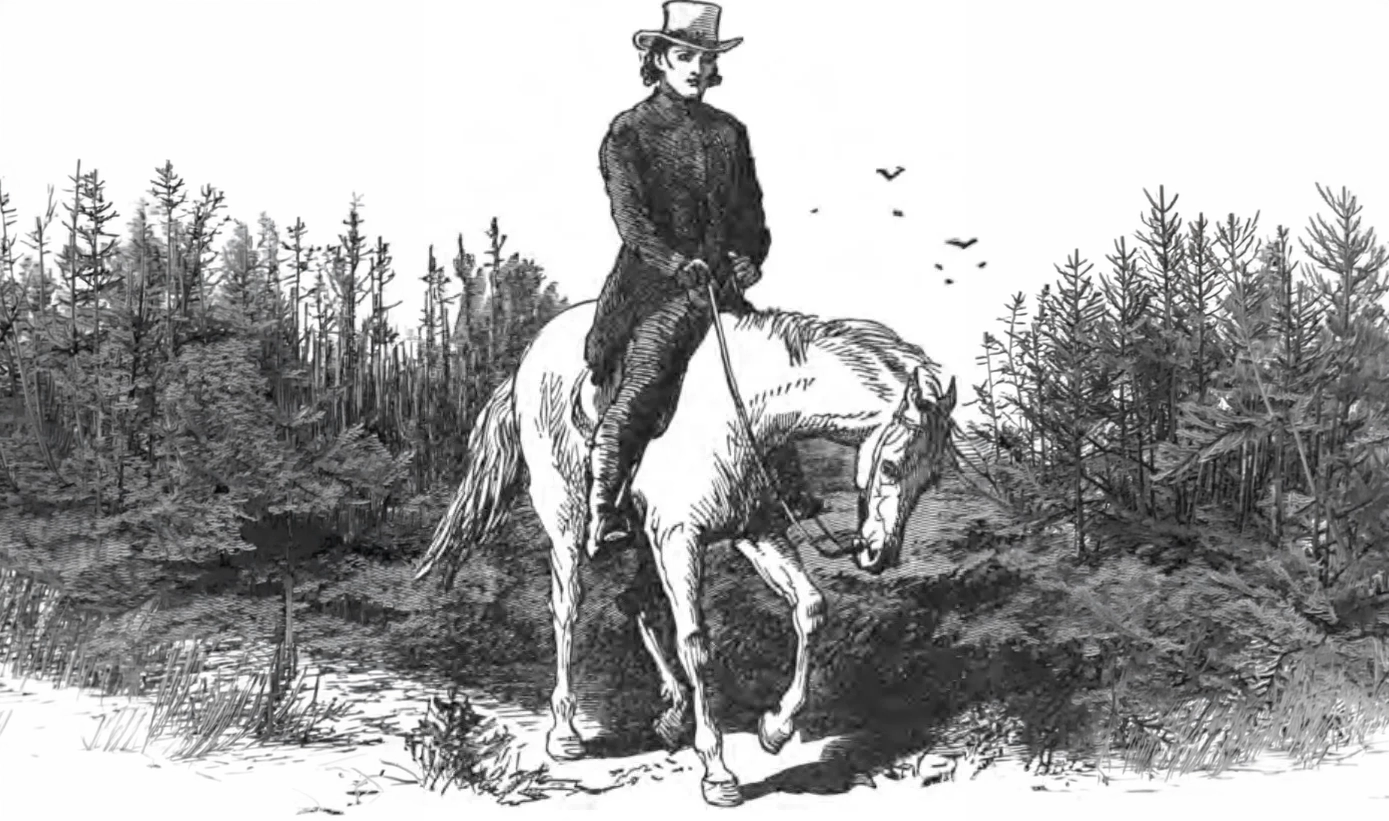
Is itinerant ministry biblically sanctioned?
Jesus and Itinerant Ministry
Itinerant ministers are often on the move, traveling from place to place preaching and teaching God’s Word. But is itinerant ministry a biblical idea or is it merely something that celebrity minded preachers created to wow crowds and to bring home a bag of cash?
Jesus and His Apostles were itinerant preachers as was Paul and his team. And in Third John the Apostle introduces us to traveling preachers/teachers.
Jesus chose, crafted (trained), commissioned, and connected his apostles, aka the twelve. In Luke 8: 1-3 Jesus and the twelve were journeying “through cities and villages, proclaiming the good news of the kingdom of God.” They had company, three women who assisted them: Mary Magdalene, Joanna, and Susannah. These women were important to the team—they were not apostles, but they were assistants to the apostles. They “provided for them” [Jesus and the twelve]. They likely supplied funding, food, and daily care. Godly women were an integral part of the ministry of Jesus and his disciples. Though treated poorly in some circles, Jesus treasured the work of women. As did the Apostle Paul—Euodia and Syntyche, for example, assisted him in gospel ministry (Philippians 4:2-3).
Jesus and his disciples were a band of itinerants. Perfection surrounded by imperfection. The imperfect sinful disciples started out as the chosen interns of Jesus. They listened to Jesus, watched Jesus, and learned from him. They were usually slow to learn; prideful men who had to learn humility. But Jesus took this band of interns and crafted them into foundation stones of the church—and itinerant preachers of the gospel.
Jesus commissioned his band of itinerants to go on a mission trip without him (Luke 9:1-6). They had to practice what they had learned. Before sending them, he gave them “power and authority” over demons and disease. They were uniquely gifted in that way. Those gifts given to the apostles by Jesus were not necessarily passed on to preachers after them: church elders, pastor/teachers, evangelists, and itinerant ministers are not apostles in the same way that the twelve were. However, the gift of preaching and teaching God’s Word was given and employed throughout the New Testament and church history well beyond the 12. Preaching and teaching was their primary calling.
Luke 9 provides a snapshot of the commissioning of the Apostles for their itinerant ministry.
- They Were Empowered by Jesus. He gave them power and the authority to use their God-given power to do His work.
- They Were Commissioned by Jesus. They were to cast out demons, heal the sick, and preach the kingdom of God.
- They Were Given a Plan of Action by Jesus. “Take nothing for your journey, no staff, nor bag, nor bread, nor money; and do not have two tunics. And whatever house you enter, stay there, and from there depart. And wherever they do not receive you, when you leave that town shake off the dust from your feet as a testimony against them. And they departed and went through the villages preaching the gospel and healing everywhere.”
The orders sound strange to us: “Don’t take the necessities of life—only wear the clothes on your back.” In my town there are restaurants everywhere. You can order from the “dollar menu” or the “high dollar menu.” In Jesus’ day food was not so readily available. Travelers were dependent on the hospitality of others. Did Jesus lay down a law that itinerant preachers then and forevermore are forbidden from taking food, money, and a change of clothes with them on their ministry missions?
It is important to compare Scripture with Scripture. Look at Luke 22:35-36, “And he said to them, “When I sent you out with no moneybag or knapsack or sandals, did you lack anything?” They said, “Nothing.” He then said to them, “But now let the one who has a moneybag take it, and likewise a knapsack. And let the one who has no sword sell his cloak and buy one.”
I am just skimming from the top of the text, but a couple of things seem clear. 1) We might deduce that a one-size-doesn’t-fit all on the matter of what to take on a preaching trip. Clearly, He was teaching the disciples in Luke 9 that He could be trusted and that He would provide for their needs through the hospitality and provision of others. He then sent them out and tested them to see if they would trust Him. He pointed that out in Luke 22. “Did you lack anything?” This question has in view his words in Luke 9 to take nothing with you. Luke 22 also demonstrates that God will provide. But in that passage, he told the disciples that they should make plans— pack a sandwich and a bottled water and put a few dollars in their wallets to cover expenses. Also in that situation, murderous hearts were heating up against Jesus: the crucifixion was around the corner and persecution was a real threat for his followers—so, Jesus wanted them to take provision for their journey. Hospitality might have been more difficult to come by in the dangerous circumstances of that time. Whether the instruction was “don’t pack a single thing” or “pack your bags,” the point Jesus made was that He can be trusted to provide for his preachers.
Paul and Itinerant Ministry
When Paul came along, he taught that all true preachers are worthy of being paid. That he chose personally to be bi-vocational is not an argument against paying the preacher. It is one of context. Paul’s choice was related to his need to silence critics who were anxious to accuse him of wrong doing. But he didn’t require or even expect that all preachers would supplement their income by making tents or by selling life insurance. He didn’t forbid a side job, but he also didn’t require or expect them to have one. For those who labor in the word and doctrine, he says—”double honor.” The preaching of the word was of such great value to Paul as was the preacher of the Word. Both, Paul taught, were to be honored. Anything less is sinful.
Years ago, an elderly man called me one morning and asked me to preach his wedding service. I asked him when his wedding was scheduled, assuming it was a few months into the future. He said, “We will be over to your house in a little while.” That surprised me. Normally I don’t perform same day weddings and I always require several counseling sessions prior. But as this was an elderly couple and both professed Christ, I agreed. I performed the ceremony in front of our fireplace, my wife witnessed the wedding, and the happy couple departed. On his way out he turned to his new bride and said, “Pay the preacher.” She handed me a twenty and they were on their way.
That’s a true and funny story—but it is what Paul said (except for the twenty) to the church at Ephesus in I Timothy 5: “Pay the preacher. Don’t be stingy. In fact, give him double honor—that means respect and money.” At the time, Timothy was the church’s minister, but he was still an itinerant preacher who was just temporarily leading the church at Ephesus. He had been sent by Paul to put things in order. Perhaps Timothy felt a bit awkward reading that part of the letter to his congregation—”double honor,” he might have thought, “they will think that I am in this for the money.” That some are in the ministry to pad their wallet and to pursue the limelight is certainly true. But I venture to guess that most folks who are money hungry are not looking to the ministry for riches. I have never seen an advertisement, “Who Wants To be a Millionaire? The Gospel Ministry, Your Pathway to Cash and Glory.”
John and Itinerant Ministry
Third John is almost at the end of the New Testament. Go to 3 John, take a right, pass through Jude, and you land in Revelation where there are maps, charts, and specific details about the Second Coming. I’m joking, of course, about the charts and maps and details. You will find that the book of Revelation is all about Jesus. After all it is The Revelation of Jesus Christ. But I digress. Yet even in Revelation there are itinerant preachers— a couple of itinerant angels who preach as do two unnamed witnesses for example.
In Third John it was “brothers” who “came and testified to your truth.” They were “strangers” but, nevertheless, these brothers and strangers told of Gaius’s “love” “before the church.” Gaius, a faithful servant in the church, made an impression on those itinerant preachers. They beamed with encouragement and happiness by the wonderful treatment that they had received at the hand of Gaius.
That these men were itinerant preachers is obvious in vs 6b-8 where John instructs Gaius: You will do well to send them on their journey in a manner worthy of God. For they have gone out for the sake of his name, accepting nothing from the Gentiles [unbelievers]. Therefore, we ought to support people like these, that we may be fellow workers for the truth.” John went on to warn about a man in the church named Diotrephes who “likes to put himself first” and who rejected apostolic authority. This man was about power—he had only his personal interests in mind. He refused to even welcome these itinerant preachers. Not only that, but he also punished anyone else who welcomed them. In fact, he kicked them out of the church. Talk about a power-hungry and insecure man.
What do we have here?
- Itinerant teachers travel “for the sake of his [Jesus] name.” What this passage means is that their travels were for the specific purpose of gospel ministry.
- Itinerant teachers were to be supported. Why? John says: They go out in the name of Jesus to do the work of Jesus. NT readers have read this line of reasoning before.
- Itinerant teachers were to be sent on their journey “in a manner worthy of God.” This means— hospitality, respect, and a generous supply of money for their journey. John doesn’t say that they were to be given a private jet so that they could criss-cross the country without being entangled with the riffraff on a commercial flight. Only false teachers like Kenneth Copeland demand such treatment. But John clearly says that godly itinerant ministers ought to be well provided for, with enough funds to take care of their needs. Why? They are doing God’s work. Honor them because they are employed in the service of God—the Creator of the universe who sent His Son to save sinners!
- Itinerant Ministers extend the work of the ministry. Get this! When faithful ministers go forth in the name of Jesus, for the glory of Jesus, and for the good of God’s people, then those who support them are joining in their work. The church, then and now, needs those who will go and those who will stay at home and “hold the ropes” of support. This is an exciting and visionary concept. When you financially support a godly traveling preacher, missionary, church planter, or Christian worker then you are sharing in his ministry—You are going with him. You are a part of his good work via your hospitality and support.
Gaius and Diotrephes (look up 5 paragraphs) were examples of the kinds of folks that Jesus, in Luke 9, said that his disciples could expect to encounter when they travelled. There would be folks like Gaius—full of love and generosity who would open their homes and wallets for the comfort and care of the itinerants. There would be others like prideful Diotrephes who locked his house and closed the garage to keep those pesky preachers out. And he also tried to stop others from welcoming them as well. Why? He saw the traveling preachers as a threat to his authority in the church. The itinerant preachers were no threat—they were a blessing to the church— and an extension of the ministry of God. Gaius was praised; Diotrephes was rebuked.
So, if you are a God-called itinerant minister and God is crafting you by His Word, and He has commissioned you to preach the gospel, and connected you to assist churches, encourage pastors, and build up the people of God—Go for it! You can trust God. Sometimes you may need to go with just the clothes on your back. Most of the time you should make plans and take supplies for the journey. In all cases you can trust that God will take care of you and your family. He most often provides by the hospitality of and generosity of individuals and through the partnership of churches.
That there are evil false teachers roaming around in the guise of a true preacher doesn’t negate the fact that itinerant ministry is biblical—very common in NT times, very common in church history (as we may explore in a later post), and very common in our day and time. When this works well, the itinerant minister works for the glory of God and the good of the church—and, in return, he is joyfully supported by the people of God. He is sent on his way with a smile on his face, joy in his heart, and the supplies that he needs to live and to carry on his ministry.
And when a godly itinerant preacher comes to your town, show him some southern hospitality. Take care of his needs. And send him on his way, well fed, and well supplied with resources. In other words, value the itinerant preacher, respect his message, and as the old guy told his new bride— “Pay the preacher.”
Why? Godly itinerant ministry is biblically sanctioned and a blessing to the Lord’s church.
Ray Rhodes, Jr is pastor of Grace Community Church of Dawsonville, GA and president of Nourished in the Word Ministries. He is the author of Spurgeon: The Man Beyond the Pulpit available for pre-order now, Yours, till Heaven; the Untold Love Story of Charles and Susie Spurgeon, and Susie: The Life and Legacy of Susannah Spurgeon. Ray speaks for conferences, retreats, Spurgeon events, and more. Contact him here.